
Most women are guessing. Let's stop.
A personalised nutrition approach that starts with what your body actually shows you, not the latest wellness trend, your friend's protocol or what's on the supplement shelf.
Discover the Feel Like You Again ProgrammeIf you've been eating well and still feel off, you're not alone
Here is what the data shows about most adults walking around right now (and what's quietly happening to women in midlife).
Out of omega balanceAlmost everyone has an omega-6 to omega-3 ratio above the recommended range.
Average omega ratioNearly 5 times the recommended 3:1. Modern diets have shifted this dramatically.
UK average fibre intakeThe recommended daily intake is 30g. Most UK adults eat little more than half what their gut needs to thrive.
Sources: Zinzino published research base (over 1 million tests); UK public health vitamin D data; Nordic Nutrition Recommendations.
How this shows up in midlife
Many of the experiences women have in perimenopause and menopause have multiple causes. Research keeps coming back to a few common biological foundations. This is what the science currently links to each one.
Inflammation balance
When the body's inflammation response shifts
Oestrogen has a natural anti-inflammatory effect. As oestrogen declines through perimenopause and menopause, what was held quiet can become more visible. Research links a higher-than-healthy inflammatory state with:
- Joint stiffness and aches
- Slow recovery from exercise
- Brain fog and slower mental processing
- Disrupted sleep
- Low mood and emotional volatility
- Visible skin changes
Knowing your omega ratio shows where your inflammation balance currently sits.
Gut microbiome
When the estrobolome is depleted
The gut directly influences how the body processes and recirculates oestrogen through the estrobolome. As microbial diversity drops (which most modern diets cause), research links this with:
- Bloating and digestive changes
- Altered oestrogen circulation
- Mood and energy fluctuations (gut-brain axis)
- Weaker immune resilience
- Increased systemic inflammation
A gut health test shows how your microbiome is functioning right now.
The synergy
How these foundations amplify each other
Inflammation and gut health are deeply connected. When one is off, it shifts the other. In menopause, with oestrogen also shifting, these effects compound. Research suggests:
- Gut diversity directly affects inflammation balance
- High inflammation can disrupt gut function
- Both influence how oestrogen is processed
- Shifts in either can show up as symptoms
- Foundations work better addressed together
- Chasing individual symptoms misses the cause
This is why we start with foundations, not symptoms.

Most nutrition advice is generic. You are not.
Women in perimenopause and menopause are bombarded with supplement recommendations: take this, avoid that, try this combination. Most of it is generic. Some of it works for some people. None of it is based on what's actually happening inside your body.
You can spend years (and a lot of money) trying things that may or may not be the right fit, all while symptoms persist and confidence drops.
Testing changes that. It shows you, in plain numbers, where your inflammation balance, gut health and key nutrient levels actually sit. Then we build a protocol from your results, not from a marketing brochure.
If your first BalanceTest shows you're already balanced, you don't pay for the protocol
Zinzino's Already Balanced Guarantee: if your first BalanceTest shows your omega-6:3 ratio is already 3:1 or better, you keep the test and your first month's BalanceOil+ for free. You return any remaining unopened product and the subscription cancels with no penalty.
Applies to the BalanceTest start order on a 6-month subscription. Other Zinzino products follow the standard 30-day return policy.

Inflammation balance
The body has a built-in inflammation response that's meant to switch on and off. Diet, stress and hormonal change all influence how well that balance works.
What we test
A simple at-home blood spot test measures 11 fatty acids in your blood, including your omega-6 to omega-3 ratio, your omega-3 index and 5 broader health markers.
Why it matters in menopause
Oestrogen has a natural anti-inflammatory effect. As oestrogen declines through perimenopause and menopause, the body's inflammation balance becomes more visible, often showing up as joint stiffness, sluggish recovery, brain fog or low mood. Knowing your inflammation status gives us somewhere meaningful to start.
The omega-6 to omega-3 ratio in human diets has shifted from roughly 1:1 in ancestral populations to 15-20:1 in the modern Western diet, largely due to processed seed oils and reduced oily fish intake. Research suggests a ratio closer to 3:1 supports the body's inflammation regulation.
Sources: The Importance of the Omega-6/Omega-3 Ratio (peer-reviewed); Changes in Omega-3 & 6 Fatty Acids in 20th Century; Nordic Nutrition Recommendations.
Gut health and the estrobolome
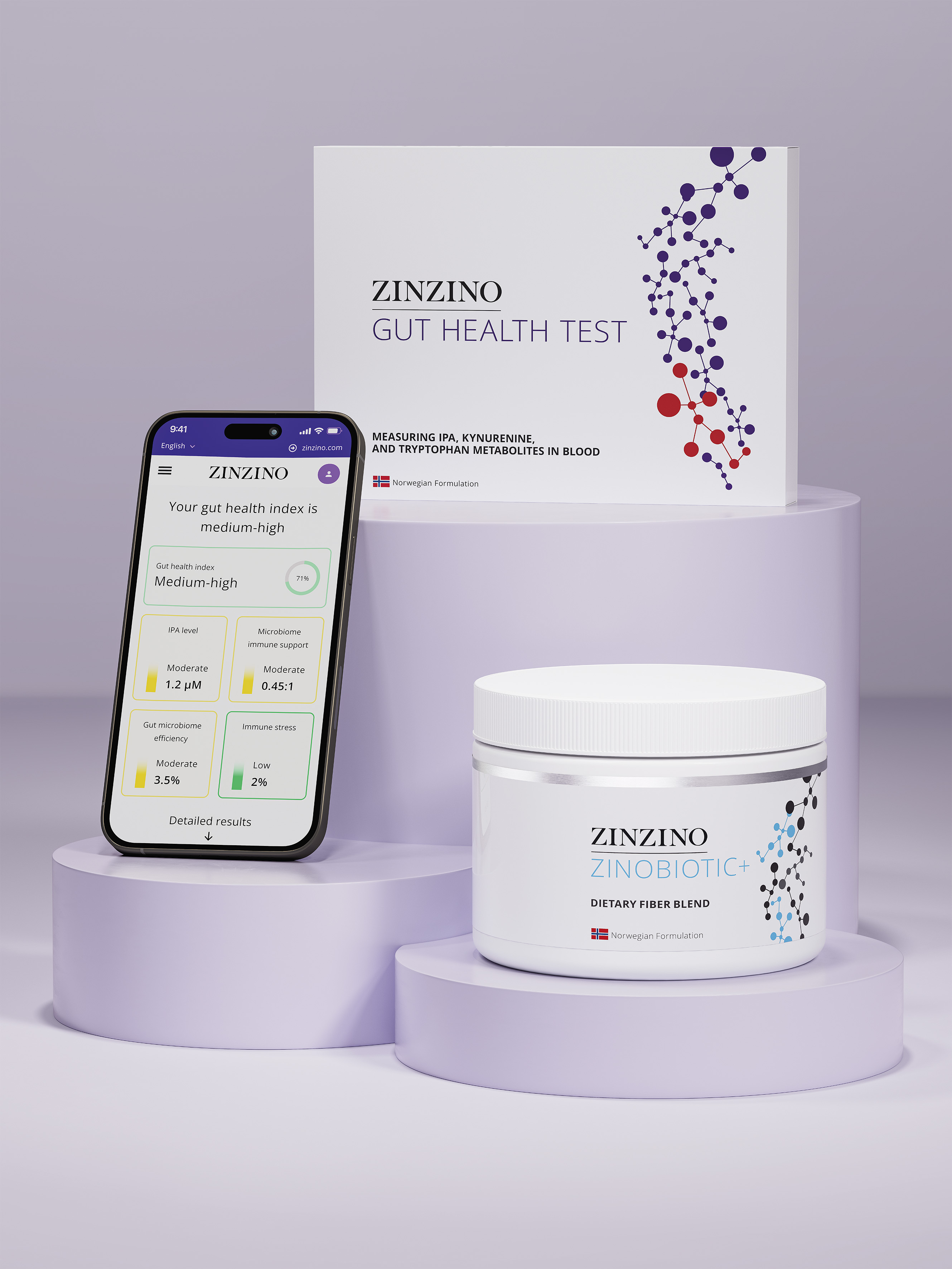
Your gut isn't just for digestion. It plays a direct role in how your body processes oestrogen, through a group of microbes scientists call the estrobolome.
What we recommend
The UK average fibre intake (around 17g) is about half what your gut microbiome needs to thrive (30g+). For that reason, daily prebiotic fibre support is part of the protocol for nearly everyone, unless you're already eating a genuinely high-fibre diet.
Optional: a deeper picture
If you want, an at-home gut health test (taken fasted) measures tryptophan-derived compounds that reflect gut microbiome function and immune signalling. Available as an add-on at additional cost.
Why it matters in menopause
When the estrobolome is healthy and diverse, it helps the body metabolise and recirculate oestrogen efficiently. When it's depleted (and most modern Western diets do deplete it), oestrogen processing changes. For women in perimenopause and menopause, gut diversity becomes more important, not less.
The estrobolome is the collection of gut microbes that produce enzymes capable of metabolising oestrogens. Reduced microbial diversity is associated with altered circulating oestrogen levels and may influence the severity of menopausal symptoms in some women.
Source: Gut Microbiota and Menopause - Oestrogen Regulation (peer-reviewed research).

Four simple steps to your personalised protocol
No GP appointments, no needles.
Discovery
We talk about how you're feeling, your symptoms and your goals. We decide together which of the three tests will give us the most useful starting picture.
At-home tests
Your tests arrive in the post. Each one is a simple fingerprick blood spot, done at your kitchen table. Takes about 10 minutes.
Lab analysis
Drop your tests back in the prepaid envelope. Independent labs in Norway analyse your results anonymously and return them in 10 to 20 days.
Your protocol
Your daily protocol is shaped around your results and how you want to feel. Retest at 120 days shows what has changed.
Your body renews itself every four months
Red blood cells regenerate roughly every 120 days. That's why we retest at the 4-month mark. You see exactly whether your protocol has changed your numbers, and we adjust from there. No more wondering if something's working. The data shows you.
A core protocol, plus optional add-ons
The core is what nearly every woman in midlife needs as a foundation. The add-ons are layered in if your results, situation or preferences point that way.
The core protocol
Foundation 01 · Tested
BalanceTest + BalanceOil+
Every woman starts with a BalanceTest to measure her omega-6 to omega-3 ratio and 5 health markers. If results show your levels need correcting, BalanceOil+ is the response: a blend of wild-caught fish oil and high-polyphenol olive oil. Independently lab-tested. Retest at 120 days proves the change.
Foundation 02 · Daily support
ZinoBiotic
A daily prebiotic fibre blend with eight naturally derived fibres (most prebiotics use one or two). Recommended for nearly every woman because UK average fibre intake (17g) is about half what the gut microbiome needs (30g+). No test needed to know UK diets are fibre-poor.
Optional add-ons
Optional
Gut Health Test
A deeper look at your microbiome function and immune signalling. Available as an add-on if you want hard data on your gut as well as foundational support.
Optional
ZinoShine+ (Vitamin D)
UK official guidance is that all adults should consider a daily vitamin D supplement during the autumn and winter months when sunlight is too weak to produce it in the skin. Optional add-on, especially through October to March.
Optional
Viva+
A daily blend including saffron extract and selected micronutrients. We discuss whether this is the right fit for you during your consultation.
The Zinzino difference
If you're going to trust your results, you need to trust where they came from and what's in the bottle. Zinzino's quality story is one of the strongest in the industry. Here is what stands behind every test and every bottle.
The polyphenol USP
Polyphenols kept in, not stripped out
Polyphenols are often lost during processing. BalanceOil+ keeps them in, where they protect the omega-3 from oxidising before it reaches your cells.
Lab transparency
Analysed by an independent lab
Your samples go to Vitas Analytical Services in Oslo, a GMP-certified independent laboratory. Not Zinzino's own lab. Results are anonymous, with no incentive to manipulate.
Genuine freshness
TOTOX value of 2.3 to 8.3
TOTOX is the industry's freshness measure. Zinzino's score sits far below industry limits, meaning the oil is genuinely fresh. Freshness matters because oxidised oil has lost much of its value before you swallow it.
Bioavailable form
Natural triglyceride form
Zinzino preserves the omega-3 in its natural triglyceride form, the same form found in fish, which the body recognises and absorbs readily.
Independently verified
IFOS, Friend of the Sea, Informed Sport
Three independent third-party certifications verify purity, sustainable sourcing and sport-grade quality. Tests are CE-marked, the regulated medical device standard. Zinzino does not grade itself.
ZinoBiotic+
Eight naturally derived fibres, not one
Most prebiotic supplements use one or two fibre sources. ZinoBiotic combines eight, each targeting different parts of the gut microbiome. Wider coverage, more meaningful support.
The research behind the approach
The science underpinning each test is well-established. Below are the key research findings and where they come from.
The omega ratio shift in modern diets
Studies tracking dietary patterns across the 20th century show the omega-6 to omega-3 ratio in Western diets has moved from roughly 1:1 to 15-20:1. Researchers attribute this to widespread use of seed oils in processed foods alongside reduced oily fish consumption. Restoring the balance toward 3:1 has been associated with improved cardiovascular markers and reduced inflammation indicators in human trials.
Sources: The Importance of the Omega-6/Omega-3 Ratio (peer-reviewed); Changes in Omega-3 & 6 Fatty Acids in 20th Century; Essential Fatty Acids In Health & Chronic Disease; Nordic Nutrition Recommendations; BMJ study on omega-3 and headache outcomes.
The gut microbiome and oestrogen
The estrobolome (the collection of gut bacteria capable of metabolising oestrogens) plays a direct role in how oestrogen is processed and recirculated in the body. Research links reduced microbial diversity with altered oestrogen levels and changes in the severity of menopausal symptoms. The body of evidence is growing and points to gut health as an underused lever during this life stage.
Source: Gut Microbiota and Menopause - Oestrogen Regulation.
The testing methodology
All three tests use dried blood spot (DBS) technology, the same methodology used in newborn screening. A single drop of blood from a fingerprick is analysed in an independent CE-marked laboratory. The methodology has been validated in peer-reviewed studies for accurate measurement of fatty acids and related blood markers.
Sources: Fatty Acids in a Drop of Blood; Measurement of Omega-3 in Dried Blood Spots; EPA and DHA Levels in Whole Blood.
What women ask before getting started
How much does the testing cost?
We discuss the test pricing in your initial consultation, so you know exactly what's involved before committing to anything. The tests can be taken individually or as a package, depending on what's most relevant for you.
Do I have to commit to the full Feel Like You Again Programme to get tested?
No. The testing and personalised nutrition protocol can be done as a standalone. Many women come for this first and then decide later whether they want to add the other pillars (natural medicine, nervous system support) into the broader programme.
Are the tests medically approved?
The test kits are CE-marked devices (the regulated medical device standard), and the laboratory analysis is independent, GMP-certified and ISO-accredited. The dried blood spot methodology has been validated in peer-reviewed research and is the same approach used in newborn screening.
When will I see results from the protocol?
Subjective changes (how you feel) follow your body's own pace and vary by person. Measurable changes in your test markers are visible at the 120-day retest, because that's when your blood cells have fully regenerated. The retest is the proof point: either the numbers have moved, or we adjust the protocol.
What if my BalanceTest comes back already healthy?
That's great news. We don't supplement what doesn't need supplementing. If your first BalanceTest shows your omega-6:3 ratio is already 3:1 or better, Zinzino's Already Balanced Guarantee applies: you keep the test and your first month's BalanceOil+ supply for free, and return any remaining unopened product to cancel the subscription without penalty.
This guarantee applies specifically to the BalanceTest start order on a 6-month subscription. ZinoBiotic+ and Vitamin D products follow Zinzino's standard 30-day return policy (unopened, sealed, re-saleable, customer covers return shipping).
Why is ZinoBiotic recommended without a gut test?
Because the UK average fibre intake is around 17g per day, when the recommended intake is 30g+. The vast majority of UK adults are not getting enough fibre to feed a healthy, diverse gut microbiome. You don't need to spend on a test to be confident that's true. The only exception is if you eat a genuinely high-fibre diet (think 30g+ daily from whole food sources), in which case we'd discuss whether you need it.
Do I have to do the gut test?
No. The gut test is offered as an optional add-on for anyone who wants a deeper picture of their microbiome function. The core protocol (BalanceTest + ZinoBiotic) works whether or not you've done the gut test.
Can I do this if I'm on HRT?
Yes. Testing and nutritional support work alongside HRT, not against it. Many women in the Feel Like You Again Programme are using HRT, considering it, or have chosen alternatives. This pillar is about giving your body the foundations it needs, whatever else you're doing.
Medical Disclaimer: The information on this website is for general educational purposes only. It is not intended to diagnose, treat, cure or prevent any disease, or to replace advice from your GP or qualified medical professional. Always consult your doctor regarding any health concerns or before making changes to prescribed treatment.
These products are not intended to diagnose, treat, cure or prevent any disease. Always read the label.
Kerry Archer RSHom is a Registered Member of the Society of Homeopaths and an independent Zinzino Partner. Available to clients resident in the UK and EU. Statistics referenced from Zinzino's published research base and UK public health data.